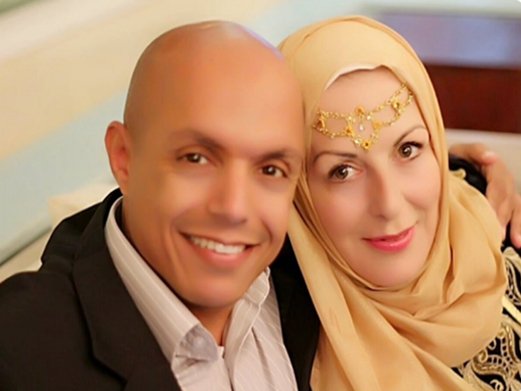


The decision to relocate to a country that may not be welcoming to Muslims for the sake of love is a deeply personal one. Recently, a thought-provoking question sparked a lively discussion in the Amirazz group: “Would you move to a country that is not friendly towards Muslims to follow your spouse?”

Shared by Erni Herawati, this question elicited diverse perspectives from Muslims around the world, reflecting the complexity of balancing faith, love, and practical realities.
Let’s dive into the varied responses and explore the nuances of this challenging dilemma. Prioritizing Faith and Ease of Practice For some, the ability to practice Islam freely is non-negotiable. Rania Farzana expressed a strong preference for living in a Muslim-majority country where practicing Islam is seamless and halal food is readily available.
“I just want peace and easy to practice Islam. Practicing Islam is everything,”
she emphasized. Instead of relocating to a non-Muslim-friendly country, Rania would invite her spouse to move to her country, where they could build a life and business together. Her stance underscores the importance of an environment that supports spiritual and cultural needs. Similarly, Novika Andarwati prefers a spouse from her own country or a Muslim-majority nation, prioritizing a setting where her faith can thrive without obstacles. For these individuals, the challenges of living in a less welcoming environment outweigh the appeal of following a spouse abroad.

Love and Adaptation: A Different Perspective
On the other hand, some see moving to a non-Muslim-friendly country as an opportunity to bridge gaps and challenge stereotypes. Jalil Anarig from the Philippines shared a heartfelt perspective:
“Why not if needed? That’s where you can prove that Muslim people are not that mean to be scared of or to be hated.”
Jalil believes in showing love and kindness as a neighbor and a Muslim, fostering understanding in a new community. Her devotion to her husband’s happiness drives her willingness to adapt, stating,
“I love my husband and I go wherever he takes me for the sake of his happiness.”
For Jalil, love transcends geographical and cultural barriers, and adaptation becomes a way to build a fulfilling life together.
Practical Considerations and Hardship
For others, the decision is shaped by practical challenges and comparisons to their current circumstances. Abdul Rahman Shuaibu from Nigeria highlighted the dire situation in his home country, where rising costs, hunger, and insecurity make life increasingly difficult. “This our own country Nigeria is about to collapse,” he noted, suggesting that the hardships at home might make relocation to a less Muslim-friendly country a viable, albeit tough, option. His response reflects how local conditions can influence such a significant life choice. Tijani Bilikisu posed a pragmatic question:
“Which one is easier? Leaving a country that is Muslim-friendly to a country that is not? Or living in a Muslim country?”
This highlights the need to weigh the relative challenges of adapting to a new environment versus staying in a familiar, faith-supportive one.
A Balancing Act
The responses to Erni Herawati’s question reveal a spectrum of priorities, from unwavering commitment to faith and cultural ease to the willingness to embrace new challenges for love or necessity. Some, like Maryam Musa Garba from Nigeria, gave a succinct “no,” firmly rooted in their preference for a Muslim-friendly environment. Others, like Jalil, see relocation as a chance to demonstrate the beauty of Islam through kindness and resilience. Ultimately, the decision to move to a non-Muslim-friendly country for a spouse is deeply personal, shaped by faith, love, practical realities, and individual circumstances. Whether prioritizing the ease of practicing Islam or embracing the challenge of building bridges in a new land, each perspective offers valuable insight into the complexities of modern Muslim life.
What would you do? Would you follow your spouse to a country less welcoming to Muslims, or would you seek a path that keeps faith first? Share your thoughts and join the conversation.