Should You Move to a Non-Muslim-Friendly Country for Your Spouse? 

The decision to relocate to a country that may not be welcoming to Muslims for the sake of love is a deeply personal one. Recently, a thought-provoking question sparked a lively discussion in the Amirazz group: “Would you move to a country that is not friendly towards Muslims to follow your spouse?”



Shared by Erni Herawati, this question elicited diverse perspectives from Muslims around the world, reflecting the complexity of balancing faith, love, and practical realities.

Let’s dive into the varied responses and explore the nuances of this challenging dilemma. Prioritizing Faith and Ease of Practice For some, the ability to practice Islam freely is non-negotiable. Rania Farzana expressed a strong preference for living in a Muslim-majority country where practicing Islam is seamless and halal food is readily available.

“I just want peace and easy to practice Islam. Practicing Islam is everything,”

she emphasized. Instead of relocating to a non-Muslim-friendly country, Rania would invite her spouse to move to her country, where they could build a life and business together. Her stance underscores the importance of an environment that supports spiritual and cultural needs. Similarly, Novika Andarwati prefers a spouse from her own country or a Muslim-majority nation, prioritizing a setting where her faith can thrive without obstacles. For these individuals, the challenges of living in a less welcoming environment outweigh the appeal of following a spouse abroad.

 Love and Adaptation: A Different Perspective

On the other hand, some see moving to a non-Muslim-friendly country as an opportunity to bridge gaps and challenge stereotypes. Jalil Anarig from the Philippines shared a heartfelt perspective:

“Why not if needed? That’s where you can prove that Muslim people are not that mean to be scared of or to be hated.”

Jalil believes in showing love and kindness as a neighbor and a Muslim, fostering understanding in a new community. Her devotion to her husband’s happiness drives her willingness to adapt, stating,

“I love my husband and I go wherever he takes me for the sake of his happiness.”

For Jalil, love transcends geographical and cultural barriers, and adaptation becomes a way to build a fulfilling life together.

Practical Considerations and Hardship

For others, the decision is shaped by practical challenges and comparisons to their current circumstances. Abdul Rahman Shuaibu from Nigeria highlighted the dire situation in his home country, where rising costs, hunger, and insecurity make life increasingly difficult. “This our own country Nigeria is about to collapse,” he noted, suggesting that the hardships at home might make relocation to a less Muslim-friendly country a viable, albeit tough, option. His response reflects how local conditions can influence such a significant life choice. Tijani Bilikisu posed a pragmatic question:

“Which one is easier? Leaving a country that is Muslim-friendly to a country that is not? Or living in a Muslim country?”

This highlights the need to weigh the relative challenges of adapting to a new environment versus staying in a familiar, faith-supportive one.

 A Balancing Act

The responses to Erni Herawati’s question reveal a spectrum of priorities, from unwavering commitment to faith and cultural ease to the willingness to embrace new challenges for love or necessity. Some, like Maryam Musa Garba from Nigeria, gave a succinct “no,” firmly rooted in their preference for a Muslim-friendly environment. Others, like Jalil, see relocation as a chance to demonstrate the beauty of Islam through kindness and resilience. Ultimately, the decision to move to a non-Muslim-friendly country for a spouse is deeply personal, shaped by faith, love, practical realities, and individual circumstances. Whether prioritizing the ease of practicing Islam or embracing the challenge of building bridges in a new land, each perspective offers valuable insight into the complexities of modern Muslim life.

What would you do? Would you follow your spouse to a country less welcoming to Muslims, or would you seek a path that keeps faith first? Share your thoughts and join the conversation.

I Waited and Prayed: How Patience and Faith Led Me to the Right Marriage

Assalamu Alaikum wa Rahmatullah,

I’d like to share my story—a personal journey of love, patience, and trusting in Allah’s plan. It’s a reminder that sometimes, the heart knows what it wants long before life makes it possible.

It all started in August 2016 when I wanted to get married to a man who had reverted to Islam years before we met. We got to know each other through work—our workplace is a family-run business, so my parents and brother are involved there too. From the first time I saw him, I felt something, but I didn’t know how he felt about me. So, I kept my feelings to myself.

Not long after, my brother quietly hinted that this man was interested in marrying me. But he had a child from a previous relationship. I knew right away this would be a big issue for my parents, especially my father. So, I made a decision: I’d wait. If he was serious, he would prove himself and eventually speak to my father when the time was right.

Five months passed. I saw him at work every day, and though I sometimes wanted to ask him when he would speak to my parents, I held back. Then, one day my father came to me and said, “I’ve found someone for you.” My heart leapt—maybe it was finally him?

But no. It was someone else—a man from Egypt who wanted to marry me. My father liked him and thought he was a good match. I, however, felt differently. I told my father no, many times. I wasn’t comfortable marrying someone living abroad without knowing how long it would take for us to be together. Most importantly, I wanted to stay close to my family, especially my grandmother, who was terminally ill at the time.

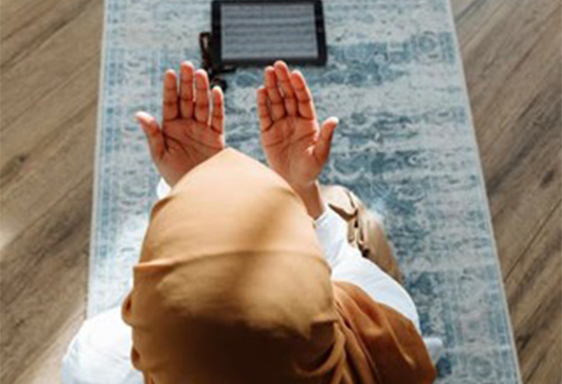
Still, my father kept pushing. When January came, I traveled to Umrah with my family. There, I prayed istikhara. I asked Allah for clarity and strength. Deep in my heart, I felt I should wait a little longer.

Soon after we returned, my father gave me a deadline—one week to give a final answer about the man from Egypt. I felt trapped. That same week, at work, the man I liked came up to me and casually asked, “What kind of husband would you want?” My heart ached. I responded quickly, “It doesn’t matter. I’m marrying someone from Egypt,” and walked away. I cried alone in the bathroom that day. I realized just how deeply I had fallen for him.

But Allah’s timing is always perfect.

Within that very same week—the deadline I had to respond—he came to my father’s house. After eight long months of waiting, he finally proposed. My heart was full of emotion and relief. My father asked me to choose: the man from Egypt or the one I had waited for.

At first, I only saw the choice as an escape from the proposal I didn’t want. But my father reminded me of all the risks—his past divorces, the child from a previous relationship. He warned me that this was the life I would have to live.

And I said yes.

After a year of planning and waiting, we got married. Alhamdulillah, it’s been nearly a year and a half, and we are happy—truly happy. My father, who was once so hesitant, is now pleased and content with our marriage. My mother supported me through it all, always reminding me: “Choose what makes you happy.”

I did. And I don’t regret it—not for a second.


Sometimes the right love requires waiting, courage, and trusting Allah’s plan over our fears.
To anyone going through uncertainty in their own love story: Be patient, pray sincerely, and trust that what is meant for you will never miss you.

Moral of the Story

This journey taught me that love and patience go hand in hand—but so does respect for our parents, especially our fathers. While my heart knew what it wanted, I never acted in secrecy. I waited. I prayed. I listened to my father, even when we disagreed. And in the end, I spoke to him openly and honestly about my feelings.

It wasn’t always easy, but through open communication and sincere dua, Allah softened hearts and made a way. Today, my father is happy, my mother supported me all along, and I’m grateful that I didn’t rush or hide anything.

The moral? Your happiness matters—but so does your father’s guidance and approval. When you involve your parents, trust Allah, and speak with respect and clarity, the outcome can be better than you ever imagined.