


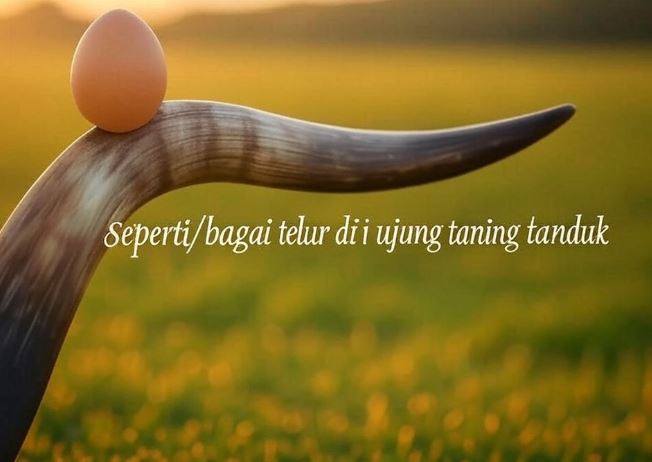
Like we say in Bahasa, some situations are Seperti/bagai telur di ujung tanduk because they are not ideal. They are like Like an egg on the tip of a horn Every time I go online, one of my routines is checking my messenger. As part of an admin team that helps members find their soulmates, I often engage with people seeking love, guidance, and community. It’s something I do with sincerity and purpose.

But yesterday was different.
I opened my inbox to find a message that shocked me to my core. A member told me something about my personal life—something I had never shared with anyone except Allah. She told me she heard it from a friend, who heard it from his friend. The chain of whispers had somehow reached people I didn’t even know, all without my knowledge or consent.
Dear sisters and brothers, we are Muslims—so please, let’s act like it.
When you mention someone’s name and spread something they never shared with you, even if you think it’s true, you’re doing harm. And when your friend shares it with another friend, and they pass it on again—what exactly are we doing? Is this what being a Muslim looks like?
Reflect on what Allah says in the Qur’an:
“Do not backbite one another. Would any of you like to eat the flesh of his dead brother? You would detest it. And fear Allah. Indeed, Allah is Accepting of repentance and Merciful.”
(Surah Al-Hujurat 49:12)
And reflect on what our beloved Prophet ﷺ taught:
The Messenger of Allah ﷺ once asked, “Do you know what backbiting is?”
The companions said, “Allah and His Messenger know best.”
He said, “It is to mention something about your brother that he dislikes.”
They said, “What if what we say is true?”
He replied, “If what you say is true, you have backbitten him. If it is not, then you have slandered him.”
(Sahih Muslim 4/6365, Sunan Abu Dawood 3/4856, Al-Muwatta 46/10)
And finally, let’s remember this hadith:
Abu Musa Al-Ash’ari (RA) asked the Prophet ﷺ, “Which Muslim is best?”
The Prophet ﷺ replied, “The one from whose tongue and hands the Muslims are safe.”
(Sahih al-Bukhari 1/10, Sahih Muslim 1/64)
Let this be a reminder—for me first and foremost, and for you reading this: we are accountable for every word we speak or share. The damage done by the tongue can’t always be seen, but it can leave deep wounds in the heart.
If you’ve been part of gossip, pause and ask Allah for forgiveness. If someone trusts you with silence, honor it. And if you hear something that’s none of your business, let it stop with you.
May Allah guide us to use our speech in ways that bring light, not harm.
May He protect us from the sin of backbiting and help us heal what has already been hurt.
Please share this message as a reminder—because sometimes the worst wounds are the ones caused by words.